Welcome to Tornado Diamond Tools
Tornado Diamond Tools is a premier Australian wholesaler dedicated to supplying the construction, flooring, and stone industries with high-performance diamond tooling and machinery. Based in Coopers Plains, QLD, we have built a reputation on one simple promise: consistent quality that professionals can rely on.
We are not just a supplier; we are industry specialists. Our team understands the harsh realities of Australian worksites, which is why every blade, cup wheel, and grinder in our inventory is engineered to perform under pressure. Whether it’s concrete grinding, drilling, or finishing, our products are “tried and tested” ensuring that when your customers buy Tornado, they are buying the best.
What Diamond Grit Should You Use for Concrete Grinding?
Choosing the right diamond grit is an important part of concrete grinding. Grit affects how aggressively the tooling removes material, how quickly the surface changes and the type of finish left behind.
Using a grit that is too coarse can remove more material than necessary, while starting too fine can make the grinding process slow and inefficient.
The best result usually comes from matching the grit to both the condition of the concrete and the stage of the grinding process.
What Does Diamond Grit Mean?
Diamond grit refers to the approximate size of the diamond particles used in the grinding segment.
Lower grit numbers generally indicate larger, more aggressive diamond particles. Higher grit numbers generally indicate smaller diamond particles that remove less material and leave a finer finish.
This means that a lower grit number is normally used earlier in the process, while progressively higher grits may be used as the surface is refined.
A simple way to think about grit is: lower numbers remove material faster, while higher numbers refine the surface.
When Should You Use a Coarse Grit?
Coarse diamond grits are used when material removal is the main priority.
Typical applications can include:
- Removing surface imperfections
- Levelling high spots
- Initial concrete grinding
- Removing laitance
- Preparing rough or uneven surfaces
- Beginning a multi-stage grinding process
Coarse tooling cuts more aggressively and can reduce the amount of time required to establish a flat and consistent surface.
However, it will usually leave more visible scratch patterns than finer tooling, so additional grinding stages may be required where a smoother finish is needed.
What Is Considered a Coarse Grit?
Exact grit ranges can vary between manufacturers, but coarse grinding commonly begins with lower grit numbers such as 16, 20, 30 or similar specifications.
Very low grits are generally selected for demanding material removal, while slightly higher coarse grits can be used where a balance between removal rate and surface finish is required.
The correct starting point depends on the condition of the floor and how much material needs to be removed.
When Should You Use a Medium Grit?
Medium grits are often used after the initial aggressive grinding stage.
Their purpose is to remove the deeper scratch pattern left by coarse tooling and begin refining the surface.
Medium-grit tooling can also be useful for general-purpose grinding where extreme material removal is not required.
Typical applications include:
- Refining a surface after coarse grinding
- General concrete preparation
- Reducing visible grinding marks
- Preparing the floor for finer tooling
When Should You Use a Fine Grit?
Fine diamond grits are used when surface refinement becomes more important than aggressive material removal.
As the grit number increases, the diamond particles become smaller and the scratch pattern becomes finer.
Fine-grit tooling may be used when:
- A smoother concrete finish is required
- The floor is being prepared for polishing
- Scratch marks from previous stages need to be reduced
- Only light surface refinement is required
Fine tooling removes less material, so it is generally not the best choice for correcting significant surface irregularities.
Why Grit Progression Matters
In many grinding and polishing applications, the surface is refined through a sequence of progressively finer grits.
Each stage removes or reduces the scratch pattern left by the previous stage.
For example, a process might begin with an aggressive coarse grit, move to a medium grit and then continue into finer tooling as the desired finish is approached.
Skipping too many grit stages can leave scratches that the next tool struggles to remove efficiently.
Why Not Start With a Fine Grit?
Starting with a grit that is too fine can make the grinding process unnecessarily slow.
If the floor has high spots, heavy surface contamination or significant imperfections, fine tooling may spend a long time trying to achieve work that a coarse tool could complete much more efficiently.
This can increase machine time, labour cost and wear on the tooling.
The goal is to use the most appropriate grit for the amount of material that needs to be removed.
Factors That Affect Grit Selection
How Much Material Needs to Be Removed?
Before choosing the grit, consider the condition of the floor.
If the surface has major imperfections or substantial material needs to be removed, a coarse grit will generally be more efficient.
If the concrete is already relatively flat and only requires light preparation, a less aggressive starting grit may be appropriate.
The aim is to avoid both over-grinding and unnecessary machine time.
Does Concrete Hardness Affect Grit Selection?
Concrete hardness and diamond grit are separate factors, but both affect tool performance.
The grit determines the size of the diamond particles and therefore how aggressively the surface is cut.
The bond controls how those diamonds are exposed as the tooling wears.
This means that you need to consider both:
- The correct grit for the grinding stage
- The correct bond for the hardness and abrasiveness of the concrete
A suitable grit paired with the wrong bond may still perform poorly.
What Happens When You Choose the Wrong Grit?
What Happens If the Grit Is Too Coarse?
If the grit is more aggressive than the application requires, it can leave deep scratch patterns and remove more concrete than necessary.
This may create additional work because more grinding stages are then required to refine the surface.
For light preparation or finishing work, an unnecessarily coarse tool can therefore reduce overall efficiency.
What Happens If the Grit Is Too Fine?
If the grit is too fine, the tooling may struggle to remove surface defects or significant material.
You may notice:
- Slow grinding progress
- More machine passes than expected
- Difficulty removing previous scratch patterns
- Longer project times
Moving to a coarser grit may allow the machine to complete the initial work more efficiently before returning to finer tooling.
A Simple Diamond Grit Guide
- Coarse grit: Aggressive material removal, levelling and initial grinding.
- Medium grit: General grinding and refinement after coarse tooling.
- Fine grit: Surface refinement and preparation for finer finishing or polishing stages.
The exact grit sequence will depend on the tooling system, the concrete and the required finish.
Choosing the Right Starting Grit
Before selecting your starting grit, consider:
- The current condition of the floor
- How much material needs to be removed
- The finish required
- Whether additional grinding stages will follow
- The hardness and abrasiveness of the concrete
- The grinding machine being used
The correct starting grit should remove the required material efficiently without creating unnecessary additional work later in the process.
Choose Grit Based on the Grinding Stage
There is no single diamond grit that is correct for every concrete grinding job.
Coarse grits are best suited to aggressive material removal, medium grits help refine the surface, and finer grits are used as the desired finish becomes more important.
Combining the appropriate grit with the correct bond and grinding equipment can improve productivity, reduce unnecessary wear and produce a more consistent surface.
If you are unsure which grit is best suited to a particular project, speak with an authorised Tornado reseller about the condition of the concrete, the grinding stage and the finish you need to achieve.

Hard Bond vs Soft Bond Diamond Tools: What’s the Difference?
Choosing the correct bond is one of the most important parts of selecting diamond tooling for concrete grinding. The wrong bond can result in slow cutting, glazing, excessive wear and unnecessary downtime, while correctly matched tooling can improve productivity and help maximise tool life.
One of the most common sources of confusion is that hard concrete will often require a softer-bond diamond tool, while softer or more abrasive concrete generally requires a harder bond.
Understanding why this happens makes choosing the right tooling much easier.
What Is the Bond in a Diamond Tool?
The diamond particles in a grinding tool are held within a metal matrix known as the bond.
As the tool grinds concrete, the exposed diamonds gradually wear and become less effective. At the same time, the surrounding bond must also wear away so that fresh diamond particles are continually exposed.
The ideal balance is for the bond to wear at a rate that keeps sharp diamonds available without allowing the segment itself to wear unnecessarily quickly.
How Hard and Soft Diamond Bonds Work
What Is a Hard-Bond Diamond Tool?
A hard-bond tool uses a metal matrix designed to wear relatively slowly.
This can be particularly useful when grinding softer or more abrasive concrete. Abrasive material naturally wears the bond quickly, so a harder bond helps prevent the segment from disappearing too rapidly.
If a soft-bond tool is used on very abrasive concrete, the diamonds may continue cutting effectively but the surrounding metal matrix can wear away too quickly, significantly reducing tool life.
What Is a Soft-Bond Diamond Tool?
A soft-bond diamond tool is designed so that the metal matrix wears more readily.
This is particularly important when working on very hard concrete. Hard concrete may not abrade the metal bond quickly enough, which can leave worn or rounded diamonds trapped at the surface of the segment.
A softer bond allows the matrix to wear away and expose fresh, sharp diamonds more readily.
A simple rule to remember is: hard concrete generally needs a softer bond, while softer abrasive concrete generally needs a harder bond.
Matching the Bond to Concrete Hardness
Why Does Hard Concrete Need a Soft Bond?
At first, the relationship can sound backwards. It might seem logical that a harder surface should require a harder tool.
However, the bond is not primarily about matching the hardness of the concrete. Its job is to control how quickly fresh diamonds are exposed.
Very hard concrete does not wear the metal matrix aggressively. If the bond is too hard, the worn diamonds can remain trapped in the segment rather than being released.
The result can be a condition commonly referred to as glazing, where the tool begins sliding across the concrete rather than grinding it effectively.
A softer bond helps prevent this by wearing away more readily and exposing fresh diamonds.
Why Does Soft Concrete Need a Hard Bond?
Softer concrete can often be much more abrasive than hard concrete.
As the tool moves across an abrasive surface, the concrete can rapidly wear the metal matrix surrounding the diamonds.
If the bond is too soft, the segment can wear away before the diamonds have delivered their full useful cutting life.
A harder bond slows this process and helps provide a better balance between grinding performance and tool life.
How Can You Tell Whether Concrete Is Hard or Soft?
Concrete hardness is not always obvious from appearance alone. Two slabs that look almost identical can behave quite differently during grinding.
Factors that can influence the surface include:
- Concrete mix design
- Aggregate type
- Age of the slab
- Curing conditions
- Surface treatments
- Previous coatings or processes
Professional contractors may use concrete hardness testing methods before choosing tooling, particularly on larger projects where selecting the wrong bond can significantly affect productivity.
Tool behaviour during the initial grinding stages can also provide valuable information.
How to Recognise Incorrect Bond Selection
Signs That Your Bond Is Too Hard
If the bond is too hard for the concrete, the tool may not expose fresh diamonds quickly enough.
Possible signs include:
- Grinding speed becomes unusually slow
- The tool appears to slide rather than cut
- Segments become smooth or glazed
- The machine requires more pressure to maintain cutting
- Tool wear appears extremely low but productivity is poor
Very low wear is not always a good sign. A tool that lasts a long time but barely cuts is not providing useful productivity.
Signs That Your Bond Is Too Soft
If the bond is too soft for the material, the segment can wear excessively quickly.
Typical signs can include:
- Rapid loss of segment height
- Acceptable grinding speed but poor tool life
- Frequent tooling replacement
- Higher-than-expected tooling cost for the area completed
In this situation, moving to a harder bond may help control wear while maintaining effective grinding performance.
Bond Selection Is About Balance
The goal is not simply to find the longest-lasting diamond tool or the most aggressive one.
Effective tooling provides an appropriate balance between:
- Grinding speed
- Diamond exposure
- Segment wear
- Machine productivity
- Overall tooling cost
The best-performing tool is usually the one that completes the work efficiently while wearing at a controlled and predictable rate.
Other Factors That Can Affect Tool Performance
Bond hardness is important, but it is not the only factor affecting concrete grinding performance.
You should also consider:
- Diamond grit
- Segment shape and size
- Machine weight and power
- Grinding speed
- Number of segments in contact with the floor
- Wet or dry grinding conditions
- The type of surface coating or contamination present
Changing one of these factors can affect how the tooling behaves, even when the bond itself is appropriate.
Choosing the Right Bond for the Job
What If You Are Unsure Which Bond to Use?
If the hardness of the floor is unknown, selecting tooling can require some initial testing.
Begin with tooling that is appropriate for the expected concrete hardness and monitor its performance carefully during the first part of the job.
If the tool begins glazing and cutting performance drops, a softer bond may be required. If segment wear is excessively rapid, a harder bond may provide better tool life.
For larger projects, identifying the concrete hardness before beginning can help reduce trial and error.
Hard Bond vs Soft Bond: A Simple Guide
- Very hard concrete: Generally use a softer bond.
- Medium concrete: Use tooling designed for medium-hardness floors.
- Soft or abrasive concrete: Generally use a harder bond.
Exact bond classifications can vary between tooling ranges, so always check the manufacturer’s recommendations for the specific diamond tool being used.
Correct bond selection can make a significant difference to concrete grinding performance. The bond must wear quickly enough to expose fresh diamonds while remaining durable enough to provide useful segment life.
Remember the basic relationship: harder concrete generally requires a softer bond, while softer and more abrasive concrete generally requires a harder bond.
If you are unsure which bond is best suited to a particular floor, speak with an authorised Tornado reseller about the concrete, grinding machine and application. Correct tooling selection can help improve productivity, reduce unnecessary wear and achieve a more consistent result.

Choosing the Right Diamond Blade for Concrete Cutting
Choosing the right diamond blade for concrete cutting can have a major impact on cutting speed, blade life and the quality of the finished cut. Concrete varies considerably in hardness, abrasiveness and composition, so a blade that performs well on one project may not be the best choice for another.
Understanding the material being cut, the equipment being used and the type of cut required will help you select a diamond blade that performs efficiently and delivers consistent results.
How Does a Diamond Blade Cut Concrete?
A diamond blade uses industrial diamonds held within metal segments around the edge of the blade. As the blade rotates through the material, exposed diamonds grind and cut the concrete while the metal bond gradually wears away to expose fresh diamond particles.
This relationship between the diamonds and the bond is one of the most important factors affecting blade performance.
A correctly matched blade should expose fresh diamonds at an appropriate rate while maintaining enough segment life to complete the work efficiently.
Match the Blade to the Concrete
Start With the Material You Are Cutting
Before choosing a blade, identify exactly what you will be cutting. Concrete is not a single uniform material, and its characteristics can vary significantly between projects.
Consider factors such as:
- Concrete hardness
- Aggregate type and hardness
- Age of the concrete
- Presence of reinforcing steel
- How abrasive the material is
- The depth and length of the cut
These characteristics affect how quickly the blade cuts and how rapidly the diamond segments wear.
Hard Concrete and Soft Concrete Require Different Bonds
The hardness of the concrete influences the type of bond that should be used in the blade’s diamond segments.
As a general principle, harder concrete often requires a softer bond, while softer and more abrasive concrete typically requires a harder bond.
When cutting hard concrete, a softer bond helps the segment wear at a rate that continually exposes fresh diamonds. If the bond is too hard, the blade may glaze and cutting performance can slow considerably.
When cutting softer or highly abrasive concrete, a harder bond can help prevent the segment from wearing away too quickly.
This is why simply choosing the hardest or longest-lasting blade is not necessarily the best approach. The blade needs to be matched to the material.
Consider the Aggregate
The aggregate inside concrete can also have a significant effect on diamond blade performance.
Hard aggregates place greater demands on the exposed diamonds and may slow the cutting process. Softer or more abrasive materials can cause the metal bond to wear more rapidly.
If you regularly work within a particular region or with a particular type of concrete, understanding the typical aggregate can make blade selection considerably easier.
Are You Cutting Reinforced Concrete?
Many concrete structures contain reinforcing steel. If there is a possibility that the blade will encounter reinforcement during the cut, choose a blade designed for reinforced concrete applications.
Cutting through steel places additional stress on both the diamond segments and the cutting equipment. A blade that performs well in plain concrete may not provide the same performance when repeatedly cutting through reinforcement.
Knowing whether reinforcing steel is present before starting the job can help you select the appropriate blade and equipment.
Match the Blade to the Cutting Method and Machine
Wet Cutting or Dry Cutting?
Wet Cutting
Water helps cool the blade and can reduce airborne dust during cutting. Wet cutting is commonly used with larger saws and for demanding or continuous cutting applications.
Cooling the blade can also help maintain consistent performance when carrying out longer or deeper cuts.
Dry Cutting
Dry cutting is often used with handheld equipment where water cannot practically be introduced to the work area.
Dry-cutting blades are designed to manage heat differently, but the blade should still be allowed to cool appropriately during use. Always follow the blade and equipment manufacturer’s operating instructions.
Choose the Correct Blade Diameter
The blade must be compatible with the machine being used.
Before fitting a diamond blade, check:
- Blade diameter
- Arbor or bore size
- Maximum operating speed
- Required cutting depth
- Machine power
- Guard compatibility
Never fit a blade to a machine that exceeds the blade’s stated maximum operating speed.
Consider Blade Design and Overall Productivity
Segment Design Can Affect Performance
Diamond blades are available with different segment configurations designed for different cutting characteristics.
Segment design can influence:
- Cutting speed
- Cooling
- Debris removal
- Segment life
- The smoothness of the cut
An aggressive blade may be ideal where productivity is the priority, while other applications may require greater control or a cleaner finished edge.
The best choice depends on the material and the result required.
Don’t Choose a Blade Based on Price Alone
The lowest purchase price does not necessarily mean the lowest cutting cost.
A blade that cuts slowly, wears rapidly or requires frequent replacement can ultimately cost more in labour and downtime than a blade better matched to the application.
When comparing diamond blades, consider overall productivity rather than simply the initial cost.
This includes:
- Cutting speed
- Blade life
- Number of cuts completed
- Downtime for blade changes
- Quality of the finished cut
Monitor Blade Performance During Cutting
Once cutting begins, the behaviour of the blade can provide useful information about whether it is correctly matched to the material.
If cutting speed drops significantly, the blade begins to glaze or excessive heat develops, the bond may not be appropriate for the material or the cutting setup may need to be reviewed.
Likewise, unusually rapid segment wear may indicate that the blade is too soft for the material being cut.
Rather than forcing a poorly performing blade through the material, reassess the application and determine whether a different specification would provide better results.
Choosing the Right Diamond Blade for the Job
Diamond Blade Selection Checklist
Before selecting a blade for concrete cutting, ask:
- What type of concrete am I cutting?
- How hard and abrasive is the material?
- What aggregate is present?
- Is the concrete reinforced?
- Will the cutting be wet or dry?
- What machine will be used?
- What blade diameter and bore are required?
- How deep is the cut?
- Is cutting speed, blade life or finish the main priority?
There is no single diamond blade that is ideal for every concrete cutting application. The best performance comes from matching the blade specification to the concrete, cutting equipment and type of work being carried out.
Taking the time to consider concrete hardness, aggregate, reinforcement, bond and cutting method can improve productivity, extend blade life and produce a more consistent result.
If you are unsure which diamond blade is best suited to your application, speak with an authorised Tornado reseller for advice based on the material you are cutting, the equipment you are using and the result you need to achieve.

How to Choose the Right Diamond Cup Wheel
Choosing the right diamond cup wheel can make a significant difference to the speed, finish and efficiency of a concrete grinding job. With different bonds, grits and segment designs available, selecting the right wheel depends on both the material you are working with and the result you are trying to achieve.
Whether you are removing coatings, preparing a concrete floor or carrying out general surface grinding, understanding a few basic factors will help you select a cup wheel that performs effectively and provides the service life you expect.
What Is a Diamond Cup Wheel?
A diamond cup wheel is a grinding tool designed primarily for working with concrete, masonry and other hard mineral surfaces. Diamond segments are positioned around the wheel and progressively remove material as the wheel rotates.
Cup wheels are commonly fitted to handheld angle grinders and are particularly useful for areas that larger floor grinding machines cannot easily reach.
Typical applications include:
- Concrete surface preparation
- Removing coatings and surface contaminants
- Levelling uneven concrete
- Grinding high spots and joints
- Edge grinding
- General concrete clean-up
Match the Cup Wheel to the Concrete
One of the most important considerations when choosing a diamond cup wheel is the hardness and abrasiveness of the concrete.
Concrete varies considerably. Two slabs that appear similar can behave very differently during grinding because of differences in aggregate, curing, age and the composition of the concrete.
The relationship between concrete hardness and the bond used in the diamond segment is particularly important.
The hardest concrete does not necessarily require the hardest diamond bond. The bond needs to wear at the correct rate so that fresh diamond particles continue to be exposed during grinding.
As a general principle, harder concrete often requires a softer bond, while softer or more abrasive concrete generally requires a harder bond.
A softer bond allows the matrix surrounding the diamonds to wear away more readily on hard concrete and continually expose fresh cutting points.
On softer or more abrasive concrete, a harder bond helps prevent the segment from wearing unnecessarily quickly.
Match the Cup Wheel to the Application
The next step is to identify the actual purpose of the grinding work. A cup wheel intended for aggressive material removal may not be the best choice when only light surface preparation is required.
Surface Preparation
Surface preparation often involves removing the upper layer of concrete, laitance or minor surface imperfections before applying a coating, adhesive or another flooring system.
In these applications, you generally want a wheel that provides efficient material removal while leaving the surface in a suitable condition for the next stage of the project.
Coating Removal
Paint, sealers, adhesives and other coatings can significantly affect how a grinding tool performs.
Some coatings may load or clog a conventional grinding wheel, while others require a more aggressive approach. The thickness and type of material being removed should therefore be considered before choosing the tooling.
Levelling and High-Spot Removal
When reducing high spots, joints or uneven sections of concrete, productivity becomes particularly important. A more aggressive cup wheel can help remove material efficiently and reduce the amount of time spent on the grinder.
Edge Grinding
Handheld grinders are frequently used around walls, columns, doorways and other areas that larger grinding machines cannot reach.
For edge work, the balance between material removal, control and the finish left behind becomes especially important.
Choose the Right Grit and Segment Design
Choose the Appropriate Diamond Grit
Diamond grit influences both the rate of material removal and the finish produced by the wheel.
Coarser diamond grits are generally more aggressive and are useful where rapid material removal is the priority. They may be suitable for initial grinding, levelling or demanding surface preparation work.
Finer grits remove material less aggressively and can produce a smoother surface. They may be used when a more refined finish is required or as part of a multi-stage grinding process.
The right grit therefore depends on both the starting condition of the concrete and what needs to happen to the surface afterwards.
Segment Design Also Matters
Diamond cup wheels are available with a range of segment configurations. The number, shape and arrangement of the segments can influence grinding speed, surface contact, dust movement and the resulting finish.
A wheel designed for very aggressive grinding may be ideal for demanding preparation work but unnecessary for a relatively light surface clean-up.
Rather than simply choosing the most aggressive wheel available, select a segment design suited to the application and the performance you need.
Match the Cup Wheel to the Grinder and Work Setup
Check Grinder Compatibility
Before fitting a diamond cup wheel, make sure it is compatible with the grinder being used.
Important factors include:
- Wheel diameter
- Bore or mounting system
- Maximum permitted operating speed
- Grinder power
- Guard and dust-shroud compatibility
The grinder must have sufficient power for the intended work. Heavy concrete grinding places considerably more demand on a machine than occasional light surface preparation.
Always follow the manufacturer’s instructions for both the grinder and the diamond tooling being used.
Don’t Overlook Dust Control
Concrete grinding can produce substantial amounts of very fine dust. Effective dust management is therefore an important part of the grinding setup.
Where appropriate, use a suitable grinder shroud connected to an industrial dust extraction system designed for the material being collected.
Good dust extraction can help improve visibility, keep the work area cleaner and reduce the amount of dust circulating around the grinding tool.
Appropriate personal protective equipment should also be used for the work being undertaken.
Monitor Performance and Choose the Right Tool
Watch How the Tool Is Performing
Even after selecting the correct cup wheel, it is important to monitor how the tool behaves once grinding begins.
If the wheel is grinding slowly, glazing over or producing excessive heat, the tooling may not be correctly matched to the concrete or the application.
Likewise, extremely rapid segment wear can indicate that the bond is too soft for the material being ground.
Tool performance provides useful information. If something does not appear right, it is worth reassessing the concrete, bond and grinding setup rather than simply continuing.
Diamond Cup Wheel Selection Checklist
Before choosing a cup wheel, ask the following questions:
- What material am I grinding?
- How hard or abrasive is the concrete?
- Am I preparing the surface, removing material or refining the finish?
- How aggressive does the grinding need to be?
- What grit is appropriate for the required result?
- What segment configuration is suitable for the application?
- Is the wheel compatible with my grinder?
- Do I have suitable dust extraction?
There is no single diamond cup wheel that is ideal for every concrete grinding application. The best results come from matching the tooling to the concrete, the grinder and the work being carried out.
Choosing the appropriate bond, grit and segment configuration can improve grinding efficiency, help maximise tool life and produce a more consistent result.
If you are unsure which diamond cup wheel is best suited to your application, the Tornado Diamond Tools team can help you select tooling based on the concrete you are working with, the equipment you are using and the result you need to achieve.
Diamond Cup Wheels
Optimise your concrete surface preparation with Tornado Australia’s Diamond Cup Wheels. Engineered for fast stock removal and smooth finishing, our range includes single and double row segments for general grinding, as well as turbo designs for aggressive cutting on hard concrete. Delivering excellent balance, durability, and dust flow, Tornado Diamond Cup Wheels provide consistent performance and a refined finish on every job site.

Redi Lock Slide In Diamond Shoes
Speed up your floor preparation with Tornado Australia’s Redi Lock Slide-In Diamond Shoes. Fully compatible with Redi Lock systems, these shoes feature a bolt-free slide-in design for rapid tooling changes. Available in single and double coffin segments with various bonds, they ensure aggressive grinding and superior efficiency for any concrete grinding project.

Wedge Block Diamond Shoes
Optimise your floor grinding with Tornado Australia’s Wedge Block Diamond Shoes. Featuring versatile soft and medium bond options, as well as aggressive Arrow segments for hard concrete, these blocks deliver rapid material removal and superior surface finishes. Trust in our reliable wedge-fit design for stable, efficient preparation on any project.
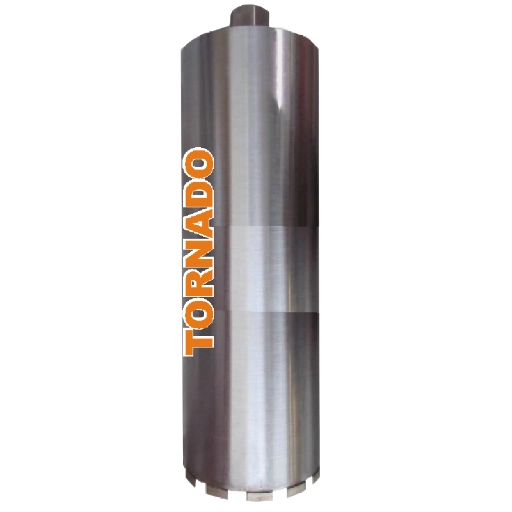
Diamond Core Barrels
Experience superior performance with Tornado Australia’s Diamond Core Barrels. Engineered for professionals, these barrels feature premium laser-welded segments to cut reinforced concrete and masonry with ease. With standard 1 1/4″ UNC fittings and 430mm depths, rely on Tornado for durability and precision in the toughest Australian conditions.
Core Bit Extensions
Achieve greater reach with Tornado Australia’s Core Bit Extensions. Engineered for professionals, these extensions are crafted from high-quality, torsion-resistant steel to penetrate thick concrete and foundations with ease. Featuring standard 1 1/4″ UNC fittings and available in 300mm or 500mm lengths, rely on Tornado for the extra depth and durability needed in the toughest Australian conditions.



Our Innovation: The AkyD™ Advantage

What truly distinguishes Tornado Diamond Tools is our unwavering dedication to pioneering technology that drives operational efficiency. We are proud to supply the Australian market with revolutionary AkyD Technology.
Unlike conventional diamond tools that rely on a random, haphazard diamond distribution, AkyD technology employs a controlled, layered arrangement set at a precise 45-degree angle. This structural innovation results in significantly faster cutting speeds and a dramatically extended tool lifespan.
However, superior cutting technology requires the right bond to be effective. To ensure peak performance, we utilize a comprehensive bond hardness table that covers the entire spectrum of concrete conditions, ranging from Extreme Soft Flooring right through to The Hardest Flooring. Each specific bond formulation is colour-coded for easy onsite identification, ensuring the tool wears at the optimal rate for the specific surface being ground.
By delivering this powerful combination of advanced AkyD technology and precise bond matching, we empower contractors to finalize projects ahead of schedule and minimize tooling costs—securing a winning proposition for both our distributors and their clients.
We are not just a supplier; we are industry specialists. Our team understands the harsh realities of Australian worksites, which is why every blade, cup wheel, and grinder in our inventory is engineered to perform under pressure. Whether it’s concrete cutting, drilling, or finishing, our products are ‘tried and tested’ to ensure that when your customers buy Tornado, they are buying the best.
Find a Trusted Reseller Near You
Discover your nearest Tornado Diamond Tooling Reseller. Explore our interactive map to quickly locate authorised Tornado Diamond Tooling resellers across Australia. Whether you’re looking for premium diamond tooling, expert product advice, or a trusted local supplier, this map helps you find exactly what you need. Simply click on a location nearest you for more details and get the right tools for every job or contact us and we will put you in contact with an expert.


Supporting Our Distributor Network
We view our distributors as an extension of our team. We support our network with:Reliable Stock Levels:
We maintain a robust inventory of diamond blades, grinding shoes, and machinery to ensure you can meet your customers' demands without delay.
Technical Expertise:
We provide in-depth product knowledge so your staff can confidently recommend the right tool for the job.
National Reach:
Our logistics network ensures timely delivery to distributors across every state and territory in Australia.
Expert Advice for Better Tooling Decisions
What Diamond Grit Should You Use for Concrete Grinding?
Diamond grit has a major effect on how aggressively concrete is ground and the finish left behind. This guide explains…
Hard Bond vs Soft Bond Diamond Tools: What’s the Difference?
Choosing between hard-bond and soft-bond diamond tooling is essential for efficient concrete grinding. Learn how concrete hardness affects bond selection,…
Choosing the Right Diamond Blade for Concrete Cutting
Choosing the right diamond blade can improve cutting speed, blade life and the quality of the finished cut. Learn how…


Become an Authorised Tornado Reseller
Elevate your product inventory and satisfy your customers' demands for excellence by partnering with Tornado Diamond Tools. We are actively seeking dedicated resellers to distribute our premium line of cutting and grinding solutions, designed to withstand the rigors of professional use. As a Tornado partner, you gain access to competitive wholesale pricing, superior dealer support, and a brand reputation built on quality.
Contact Us
